
The dumpster is sitting in your driveway and you’re staring at a pile that includes old paint cans, a busted refrigerator, half a bag of concrete mix, and a box of mystery chemicals from the back of the garage. Most of it can go in. A few things absolutely cannot, and the difference matters more than most people realize.
A single prohibited item in an otherwise clean load can get the whole thing rejected at the landfill. That means a contamination fee added to your invoice, a dumpster returned to your property still full, or both.
This guide covers what is and isn’t accepted in a roll-off dumpster rental in Tyler, TX, and where to take the materials that need to go somewhere else. At Just Dump It, we field these questions from Tyler and Smith County customers every day.
What You Can Put in a Dumpster in Tyler, TX
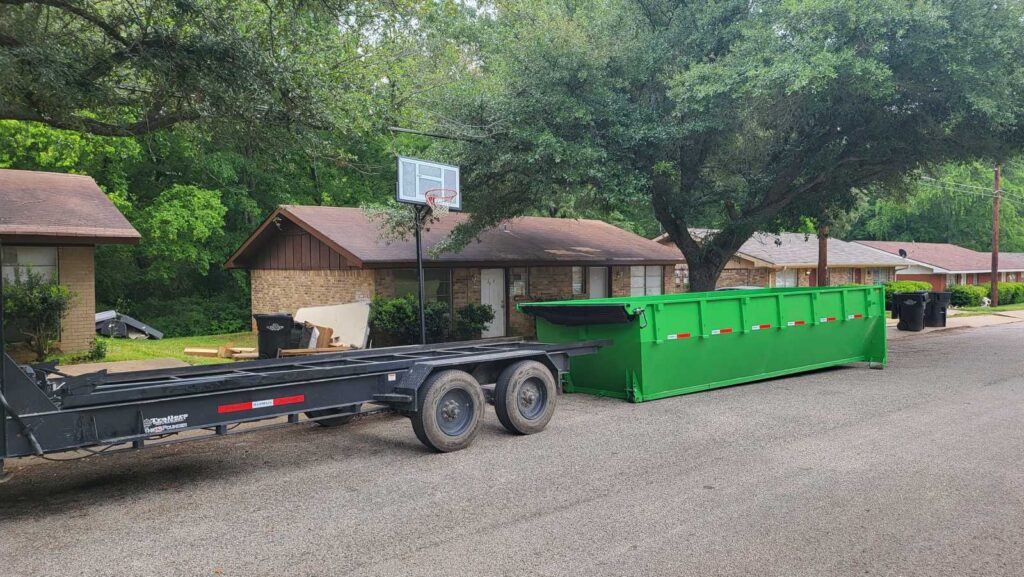
Most of the debris from a typical home cleanout, remodel, or job site is welcome in a roll-off container. Here’s the breakdown by category.
Household Junk and Furniture
If you’re clearing out a house, garage, or storage unit, most everyday items are fair game:
- Couches, mattresses, box springs, dressers, tables, and chairs
- Toys, sports equipment, and general clutter
- Clothing, linens, bedding, and bagged trash
- Cardboard boxes, packaging, and old paperwork
- Rugs, lamps, picture frames, and decor
A quick note on mattresses: some dumpster companies in Tyler charge an extra fee for them. At Just Dump It, we accept mattresses without a surcharge in most cases. Mention it when you book so we can confirm.
Construction and Remodeling Debris
Most building materials are accepted in a standard roll-off dumpster:
- Drywall, plaster, and lath
- Lumber, plywood, framing, and trim
- Tile, laminate, vinyl, hardwood, and carpet flooring
- Cabinets, countertops, and fixtures
- Doors, windows, baseboards, and crown molding
- Siding and insulation
- Demolition debris from interior tear-outs
Mixed loads of light and heavy material are fine. Just spread the weight across the floor of the dumpster so the load stays balanced for transport.
Roofing Materials
Roof tear-offs are one of the most common jobs we handle in Tyler. Accepted materials include asphalt shingles, tar paper, underlayment, flashing, and roof decking.
The thing to watch with roofing is weight. Asphalt shingles are dense, and a full residential tear-off can fill a 15-yard dumpster fast and push you over the included tonnage.
Give us a call before booking and we’ll help you pick the right size up front. For a full breakdown on sizing, see our guide to choosing the right roll-off dumpster for your Tyler project.
Yard Waste and Landscaping Debris
After a storm or a big landscaping push, a dumpster is often the easiest way to clear the yard:
- Tree branches, brush, and shrubs
- Leaves and grass clippings
- Sod (in moderate amounts)
- Small stumps and root balls
- Dirt and soil (in limited quantities)
Dirt and sod are heavier than they look. A full dumpster of soil can blow through your tonnage allowance quickly, so mention the type of yard debris when you book.
Appliances (With One Condition)
Most household appliances can go in a dumpster. The catch is anything with refrigerant.
Accepted as-is: washers, dryers, dishwashers, stoves, ovens, microwaves, and small countertop appliances.
Refrigerators, freezers, and air conditioning units are also accepted, but only after the Freon has been professionally evacuated and you have documentation. More on that in the gray-area section below.
Concrete, Brick, and Heavy Materials
Concrete, brick, and masonry are accepted, but with weight in mind. Broken concrete, brick, block, stone, and tile are all fine in moderate volumes.
For larger demolition jobs with a lot of concrete or brick, a dedicated heavy-debris dumpster is usually the smarter choice. When you call us, we can help you decide whether to mix the load or use a separate container for the dense material.
What You Cannot Put in a Dumpster in Tyler, TX
The items below are off-limits in a roll-off dumpster anywhere in Tyler. Most are banned because the landfill won’t accept them. A few are restricted because they’re a fire or safety hazard during transport.
Hazardous Chemicals and Liquids
Anything that can leak or contaminate other waste is prohibited:
- Wet or partially used paint
- Motor oil, antifreeze, and transmission fluid
- Gasoline, diesel, and other fuels
- Solvents, thinners, and adhesives
- Pesticides, herbicides, and pool chemicals
- Cleaning chemicals and bleach
Liquid chemicals leak through the floor of the dumpster, contaminate the rest of the load, and can leach into groundwater at the landfill. Even a single open paint can in a full dumpster can result in the entire load being refused.
Tires
Tires are banned from Texas landfills across the board. Car tires, truck tires, lawn mower tires, and motorcycle tires all need to go to a designated recycling facility.
Batteries
Standard AA, AAA, and 9-volt alkaline batteries are generally fine in small quantities. The ones that are not allowed:
- Car batteries and other lead-acid batteries
- Lithium-ion batteries from laptops, power tools, e-bikes, and phones
- Rechargeable batteries in large quantities
- Marine and RV batteries
Lithium-ion batteries are a growing problem at landfills because they can ignite when crushed by compaction equipment.
Pressurized Containers
Anything sealed under pressure can explode when crushed by a landfill compactor:
- Propane tanks (any size)
- Helium tanks
- Fire extinguishers
- Full or partially full aerosol cans
- Compressed gas cylinders
Appliances Containing Refrigerant
Refrigerators, freezers, window AC units, and dehumidifiers all contain refrigerant (commonly called Freon, even though most modern units use other refrigerants). These cannot go in the dumpster until the refrigerant has been professionally evacuated.
Electronics and E-Waste
Larger electronics contain lead, mercury, and other heavy metals that landfills aren’t equipped to handle. Prohibited in commercial quantities: televisions, computer monitors, desktops and laptops, printers, copiers, and stereo equipment.
Small quantities of household electronics mixed into a general cleanout load are usually fine. If you’re clearing out a home office with a lot of e-waste, give us a call first and we’ll advise on the best approach.
Other Prohibited Items
A handful of other materials round out the list:
- Asbestos and any material that contains it
- Wet concrete (dried concrete chunks are accepted)
- Medical and biohazard waste, including sharps and prescription medications
- Animal carcasses
- Whole pianos (call us first)
- Railroad ties and pressure-treated lumber in large volumes
The Gray Area: Items That Depend on the Situation
A few items live in a middle zone where the answer is “yes, but.” These are the ones that catch people off guard most often.
Paint Cans
Wet or partially full paint cans are prohibited. Empty, fully dried paint cans are accepted.
To dry latex paint at home, pour kitty litter or Oil Dry Absorbent into the can (about 2 quarts of absorbent per half gallon of paint), stir, and leave the lid off until the paint is solid. Once you can hold the can upside down without any paint dripping, it’s ready for the dumpster.
Oil-based paint is harder to dry at home and should go to the Tyler Recycling Center.
Aerosol Cans
Empty cans are accepted. Full or partially full cans are not. The test is simple: press the nozzle, and if nothing comes out, the can is safe for the dumpster.
Refrigerators and AC Units
These need their refrigerant evacuated before they can go in the dumpster. Any licensed HVAC contractor in Tyler can do this for $20 to $50 and will give you a certification tag. After that, the appliance is dumpster-eligible.
Concrete, Dirt, and Heavy Materials
Small quantities mixed into a general cleanout load are fine. A rough rule of thumb: if more than about 25% of your load by volume is heavy material, a dedicated heavy-debris dumpster is usually the better call. Let us know what you’re working with when you book and we’ll size the container accordingly.
What Happens If You Put Something Prohibited in the Dumpster?
If a prohibited item is caught at the landfill, here’s what can happen:
- The entire load may be refused and returned to your property
- A contamination fee gets added to your invoice (often several hundred dollars)
- The dumpster may need to be hand-sorted, which carries an extra labor charge
The best move is to call us as soon as you realize. If we know before pickup, we can usually pull the item and avoid the fee entirely. A two-minute phone call almost always costs less than dealing with a refused load.
When in doubt, ask before you toss.
Where to Take Prohibited Items in Tyler, TX
The materials that can’t go in a dumpster still need to go somewhere. Tyler has good options for almost every prohibited item.
Tyler Recycling Center is the main drop-off point for hazardous household materials. Address: 414 N Bois D Arc Avenue, Tyler, TX 75702. Phone: (903) 531-1388. Accepts motor oil, antifreeze, automotive batteries, paint, and other household hazardous waste. Free for Tyler residents.
Batteries: Tyler Recycling Center handles automotive and lawnmower batteries. Batteries Plus at 4906 Broadway Ave accepts rechargeables for a small fee. Best Buy and Home Depot accept rechargeables for free.
Electronics: ecoATM at Broadway Square Mall (4601 South Broadway Avenue) accepts phones and tablets and pays cash for working models. Best Buy runs a free electronics recycling program for TVs and computers.
Tires: Most Tyler tire shops accept old tires for a small per-tire fee, especially when you’re buying replacements. RCS Auto Recyclers at 10809 US-271 (903-877-4020) is another option.
Propane Tanks: Tractor Supply and U-Haul locations run propane tank exchange programs. Most propane suppliers will take back their own tanks at no charge.
Freon Appliances: Any licensed HVAC contractor in Tyler can evacuate refrigerants for $20 to $50 and provide the certification you need.
Tips for Loading Your Dumpster the Right Way
A few practical pointers that save money on pickup day:
- Distribute weight evenly across the floor of the dumpster
- Put heavy items (shingles, concrete, dirt) on the bottom and lighter items on top
- Break down bulky furniture and boxes to maximize the space you’re paying for
- Never load above the top rail, overfilled containers can’t legally be hauled
- Keep prohibited items separated from the start
- Track your rental period to avoid extension fees
For a deeper dive on what dumpster rental actually costs in Tyler, we wrote a full breakdown on dumpster rental cost in Tyler, TX.
Do You Need a Permit for a Dumpster in Tyler, TX?
For dumpster placement on private property (driveway or yard), no permit is needed. That’s where most of our deliveries end up.
For placement on a public street, the City of Tyler requires a Right-of-Way Use Permit through the Engineering Department. If you live in an HOA neighborhood, it’s worth checking your HOA rules before booking.
Frequently Asked Questions
What can I put in a dumpster rental in Tyler, TX?
Most household junk, furniture, mattresses, construction debris, roofing shingles, yard waste, and appliances without Freon are accepted in our roll-off dumpsters.
What items are prohibited in a Tyler dumpster rental?
Common prohibited items include tires, car batteries, lithium-ion batteries, paint, chemicals, motor oil, refrigerators with Freon, propane tanks, full aerosol cans, asbestos, and medical waste.
Can I put a mattress in a dumpster in Tyler, TX?
Yes. We accept mattresses and box springs without a surcharge in most cases. Some other Tyler providers charge extra, so it’s worth confirming at booking.
Can I put shingles or roofing materials in a dumpster?
Yes. Asphalt shingles, tar paper, flashing, and roof decking are all accepted. Weight is the thing to watch, so call us before booking a roofing job and we’ll help you pick the right size.
Can you put concrete or dirt in a roll-off dumpster?
In small to moderate quantities, yes. For large volumes, a dedicated heavy-debris dumpster is usually the better choice because dense materials hit weight limits fast.
Can I put a refrigerator in a dumpster?
Only after the Freon has been professionally evacuated and you have the certification. Any licensed HVAC contractor in Tyler can handle this for $20 to $50.
Are tires allowed in a dumpster rental in Tyler?
No. Tires are banned from Texas landfills. Take them to a tire shop or to RCS Auto Recyclers at 10809 US-271 in Tyler.
What happens if I put something prohibited in the dumpster?
If we catch it before pickup, we can usually pull the item and avoid any extra charge. If a prohibited item makes it to the landfill, the load may be refused or a contamination fee may be added to your invoice.
Where can I dispose of hazardous waste in Tyler, TX?
The Tyler Recycling Center at 414 N Bois D Arc Avenue accepts motor oil, antifreeze, automotive batteries, paint, and other household hazardous waste. Free for Tyler residents.
Ready to Rent a Dumpster in Tyler, TX?
Whether you’re cleaning out a house, tearing off a roof, or finishing a renovation, we have a roll-off dumpster sized for the job. Same-day delivery is available across Tyler and Smith County, with flat-rate pricing, no hidden fees, and 15, 20 and 30 yard sizes to choose from.
Call us at (903) 623-8946 or book your dumpster rental in Tyler, TX online. And if you’re staring at a pile of stuff wondering whether it’s allowed in the bin? Just ask. We answer questions like that every day.